Live Dealer Blackjack Late Surrender Availability and State Rules in the USA
Late surrender in live dealer blackjack is not a cosmetic rule variation—it is a structural edge modifier that most US-facing live casinos quietly strip out, and players who ignore state-level rule fragmentation are bleeding expected value every single shoe. The mechanic itself is brutally simple: after the dealer checks for blackjack, you forfeit half your wager to escape a hopeless hand. But whether that option even exists on your live table depends on a patchwork of state gaming regulations, studio licensing, and the provider's own margin calculus. 🎯
Why Late Surrender Disappears From Live Dealer Tables
Here is the uncomfortable truth: Live Dealer Blackjack Late Surrender Availability is governed less by player demand and more by jurisdictional gaming compacts. States like Nevada and New Jersey permit surrender as a legal wager option, but permission is not obligation. Live studios operating under those licenses routinely omit the surrender button because it cuts house edge by roughly 0.39% on a six-deck shoe. That is not a rounding error—it is a deliberate margin decision dressed up as "table variety." Most operators will never tell you this.
The technical implementation matters too. In a live dealer environment, surrender must be engineered as a real-time player decision that the dealer physically acknowledges before the hand progresses. That requires synchronized dealing software, a surrender sensor on the felt layout, and dealer training across every shift. Studios that run lean will disable the feature entirely rather than absorb the operational friction. 💰
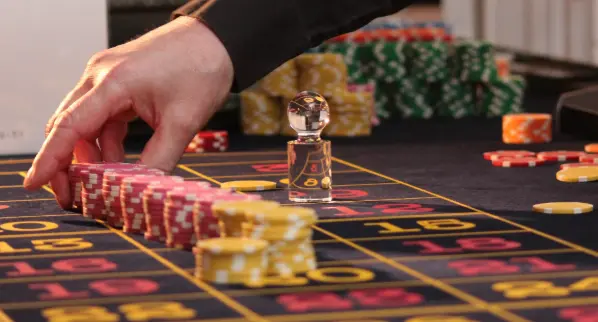
State-by-State Rule Reality for US Players
Nevada gaming regulations explicitly allow late surrender, yet a shocking number of live tables on Nevada-licensed platforms simply do not offer it. New Jersey's Division of Gaming Enforcement permits surrender as a variance, and you will find it more consistently on Atlantic City-derived live feeds. Pennsylvania allows the option under its slot and table game rules, but live studio adoption remains inconsistent. Michigan, which legalized online gaming more recently, has been the most permissive for live dealer late surrender integration—operators there treat it as a competitive differentiator rather than a threat.
This fragmentation creates a nasty trap. A player assuming uniform national rules will misprice their strategy the moment they cross a state line or switch platforms. The State Rules in USA for late surrender are not a monolith—they are a maze of compacts, tribal gaming provisions, and provider-specific table configurations that change without notice. 💡

The Dealer Interface and Surrender Timing Loophole
Even when late surrender is technically available, the timing window is where live dealer systems get sloppy. Correct implementation requires the dealer to verify no natural blackjack exists before the player exercises surrender. Some live platforms rush the surrender prompt before the hole card check, which creates a procedural contradiction—you cannot surrender a hand the dealer might already have beaten with a natural. Sharp players exploit this ambiguity by forcing a ruling, but the house edge advantage of surrender is not worth a disputed hand if the interface is broken.
Watch the dealer's hand motion. If the surrender gesture is acknowledged after the peek but before the player's hit decision, the implementation is clean. If the button appears and vanishes within a two-second window, the studio is running a cosmetic version designed to inflate hands per hour rather than protect player options. That distinction alone separates legitimate Late Surrender Availability from a marketing checkbox. 🃏
What Actually Matters When You Sit Down
Verify three things before you place a single chip on a live table. First, confirm the platform's licensing state and whether that regulator mandates surrender availability or merely permits it. Second, test the surrender button on a minimum-bet hand to see if the dealer acknowledges it in real time—do not trust the rule card alone. Third, read the table's variance disclosure, because a studio operating under multiple state licenses may configure surrender per table rather than per platform.
The financial impact compounds fast. A six-deck live shoe with late surrender available drops the house edge to roughly 0.42% under standard rules. Strip surrender out and you are staring at 0.61% or worse. Over ten thousand hands at fifty dollars a pop, that gap is not pocket change—it is the difference between a survivable grind and a slow bleed. Players who treat live dealer blackjack as a uniform product are the ones funding the studios' margin targets.