What the Peek Actually Does in Baccarat
The dealer peek is not a courtesy gesture. It is a mathematically load-bearing rule that changes the entire risk profile of a baccarat hand. When a banker shows an ace or a face card, the dealer slides the shoe's first card just enough to read its edge. That single motion determines whether the hand continues or collapses instantly. In Peek Baccarat Dealer Peek Rules, the difference between a peek and a no-peek table is the difference between a locked-in edge and a blind gamble. 🎲
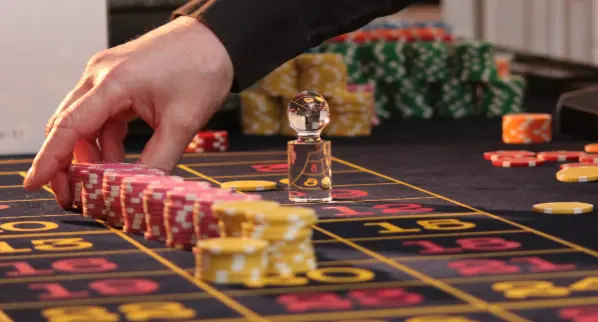
The Hardware Reality Behind the Peek
Modern shufflers and electronic shoes use infrared sensors to detect the rank before the card ever leaves the shoe. The peek is not a human decision anymore. The machine knows the card value and signals the dealer through a subtle LED sequence. This is why crypto-native platforms can enforce peek rules with absolute consistency. There is no tired dealer misreading a corner. The sensor either registers a natural nine or it does not. Any casino still relying on manual peeks is running an outdated hardware stack that introduces human error into a game where the house edge is measured in fractions of a percent.

Why Crypto Peek Baccarat Casinos Enforce Stricter Rules
On-chain baccarat tables cannot afford ambiguous peeks. Smart contracts need binary outcomes. When a player funds a hand through a wallet and the dealer draws a ten-value card, the peek rule must execute deterministically. Crypto Peek Baccarat Casinos have adopted sensor-driven no-peek protocols that eliminate the dealer's discretion entirely. The result is a faster game, fewer disputes, and a provably fair audit trail. Traditional brick-and-mortar rooms still debate whether to peek on a ten or only on an ace. Crypto tables do not debate. The code decides. ⚡
The Mathematics of the Peek Advantage
Removing the peek changes the house edge by roughly 0.03% on the banker bet. That sounds trivial until you run it across ten thousand hands. The no-peek version exposes the player to a premature dealer blackjack equivalent in baccarat: the dealer reveals a natural after the player has already committed chips. The peek rule exists to prevent that ambush. Tables that skip the peek are not offering a fairer game. They are offering a faster one with a hidden tax baked into the variance curve. Any sharp player tracking long-run expected value will spot the discrepancy within a few hundred hands.
Reading the Shoe: When the Peek Never Happens
Some tables advertise a no-peek rule and frame it as a speed enhancement. That is marketing spin. The no-peek rule shifts risk onto the player during the most volatile moment of the hand. When the banker's first two cards total zero through five, the dealer draws without checking the third card's effect on a potential natural. The player's fate is sealed before the outcome is known. This is not speed. This is manufactured uncertainty. If you are sitting at a table and the dealer does not peek on an ace or a ten, you are not playing the same game the professionals play. You are playing a modified variant that quietly tilts the math against you.
Algorithmic Peek Triggers in Digital Shoes
Digital shoes from major manufacturers embed the peek trigger directly into the card recognition firmware. The moment an ace or face card enters the reading zone, the system runs a sub-millisecond check against the total. If the hand qualifies for a peek, the dealer receives a green light. If not, the shoe locks the dealer's hand movement. This level of control is impossible to replicate with manual shuffling. It is also why crypto casinos that integrate these shoes can offer faster settlement and lower rake on banker bets. The hardware enforces the rule. The software records it. The player never has to trust a human dealer's eyesight.
What Happens When the Peek Reveals a Natural
The hand ends immediately. No third card. No dramatic draw. The peek rule exists precisely for this moment. Without it, the player would have already committed to a hand that cannot win. With it, the round terminates before the player's stake is fully exposed. This is the single most important function of the peek in baccarat. It is not about speed. It is about preventing a structural loss that the player never agreed to accept. Tables that remove this rule are not simplifying the game. They are removing a safety mechanism that has been standard in high-limit rooms for decades. The next time a dealer reaches for the shoe on an ace, watch the first card. The peek tells you everything about the table's integrity.