Jacks or Better Double Up: Should You Risk?
The double-up feature on a Jacks or Better machine is not a bonus—it is a coin-flip grafted onto a skill game, and the math behind that graft is brutal. You just hit a paying hand, the machine flashes the gamble prompt, and suddenly you are asked to pick red or black, high or low, on a single card. Strip away the casino theater and you are staring at a near-fifty-fifty proposition with a house edge baked into the payout structure. That is the entire story, and most players never run the numbers before they slap that button.
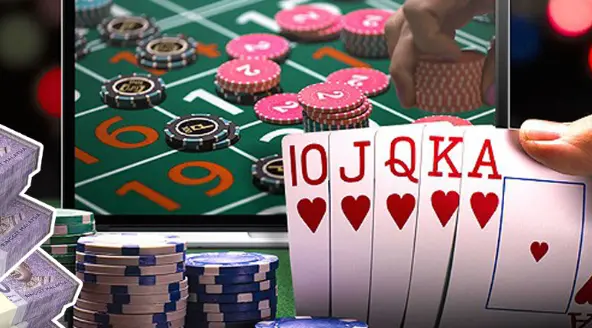
The Raw Odds of the Double Up Gamble
A standard double-up on video poker asks you to beat a dealer card. Pick high or low and you win roughly 50% of the time—but "roughly" is where the house eats you alive. Ties usually push or lose depending on the machine's firmware, and on many cabinets the tie resolution quietly shifts the true win rate to something closer to 47-48%. At a 2x payout, a 48% win rate produces an expected value of 0.96 per unit wagered. That is a 4% bleed per gamble, compounded every single time you chain the feature. Compare that to the 99.54% return of a well-played Jacks or Better game at full pay, and the double-up is a negative expectation trap that converts a skill edge into pure variance.
Run ten consecutive double-ups and your survival probability collapses to under one percent. The feature is a variance multiplier dressed as a profit multiplier. 🎲
Why the Feature Exists at All
Casino floor managers love the gamble button for one reason: it accelerates coin-in without adding a single hand of playable poker. Every double-up decision is a wager the house books at a mathematical advantage, and it keeps players seated and cycling credits far faster than the base game. The double-up risk profile is engineered to feel thrilling—the lights, the card flip, the instant doubling—while silently shaving your bankroll. From a hardware audit perspective, the RNG driving the gamble card is independent of the deal/draw RNG, which means your Jacks or Better strategy knowledge gives you exactly zero edge on that flip. You are not playing poker anymore. You are playing a coin toss with worse odds than roulette's even-money bets.

The One Scenario Where Risking Makes Sense
There is a narrow, aggressive play that sharp operators occasionally run: using the double-up as a bankroll laddering tool when you need to hit a specific credit threshold to cash out a tournament or clear a promotion. If you are sitting on a small win and the only path to a meaningful payout requires doubling, the gamble becomes a lottery ticket with defined odds rather than a pure bleed. But for cash-game players? Never. The expected value calculation is unambiguous—declining the double-up preserves your winnings at full value, and accepting it donates roughly four cents on the dollar to the operator every time. 💰
Some old-school machines offered a "half double" or allowed you to gamble only a portion of the win. Those variants soften the variance but do not fix the underlying house edge. The math does not care about your gut feeling or your hot streak.
Firmware Quirks and the Tie Trap
Audit enough cabinets and you find the nasty details. Certain double-up implementations resolve ties as losses rather than pushes, which drags the true win rate down to 46% or lower and pushes the house edge past 8%. Others cap the number of consecutive double-ups, which is actually a mercy because it stops players from riding a losing ladder into oblivion. The lesson from the hardware side is simple: the gamble feature is a configurable money sink, and operators tune it to maximize hold. Your job as a player is to recognize that the base game's 99.5% return is the only honest number on the paytable. The double-up button is a house-favoring coin flip and nothing more.
Decline it. Every time. The 0.96 EV on that flip compounds against you, and no amount of pattern-reading or card-counting superstition changes the underlying probability distribution hardwired into the machine.