Fan Tan Token Weights: The Bead Remainder Miscount Nobody Audits
The bead remainder is the single most exploited arithmetic gap in live Fan Tan hardware, and almost nobody on the floor catches it because the pit visualizes chips, not modulo operations. You drop a pile of brass tokens on the layout, the dealer sweeps four at a time, and whatever survives the final sweep becomes the winning number. That is the entire game. The house edge lives inside one unglamorous variable: the calibrated weight of each token and the tolerance band the scale was certified under.
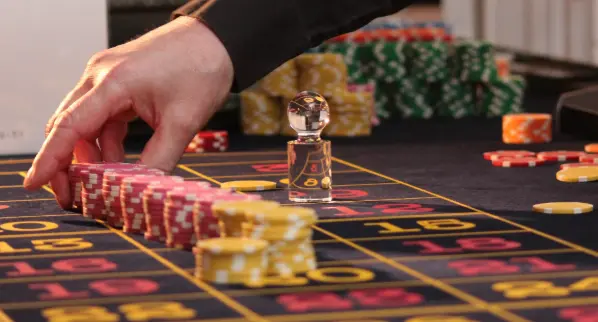
Here is the mechanism most players never think about. A Fan Tan remainder is a modulo 4 operation performed by hand. When the dealer removes tokens in groups of four, the physical count is not what decides the result. What decides it is how many tokens the counting tray registers, and that number is a function of Fan Tan token weights. If a batch of tokens drifts outside the mint tolerance, a tray sensor calibrated to a nominal mass will under-count or over-count, and the remainder shifts by one. A shift of one flips the payout from a 3-to-1 winner to a total loss. That is not a rounding error. That is the whole edge.
Why Bead Remainder Miscounts Beat Every Other Angle
Most so-called edge hunters chase dealer tells or shuffle tracking. Amateurs. The bead remainder miscount is structural, it is repeatable, and it hides inside hardware certification paperwork that nobody reads after installation. 🎯 A counting tray certified at 5.0 grams nominal with a plus or minus 0.15 gram tolerance will misclassify any token sitting at the boundary. Stack forty of those boundary tokens into a pile, and the cumulative drift can push the remainder one full unit in either direction.
Now scale that. A live table processes hundreds of rounds per shift. If even a small fraction of token batches sit at the tolerance edge, the miscount frequency compounds across the session. The floor supervisor sees a normal-looking win rate. The math underneath is quietly wrong.

The Hardware Tolerance Trap
Token manufacturing is not precision engineering. Brass and nickel-silver blanks are stamped, tumbled, and plated in batches where the mass distribution is a bell curve, not a fixed point. The certification lab tests a sample. The sample passes. The full batch ships. 🧠 The tokens that land on your table are statistically guaranteed to include outliers, and the counting tray has no idea which ones they are.
This is where the real audit work happens. You pull the tray calibration log, you cross-reference the token batch serial numbers, and you look for the correlation between batch ID and remainder drift. When a specific batch consistently produces remainder errors in the same direction, you have found a bead remainder miscount pattern that is not random chance. It is a mechanical bias you can model.
Algorithmic Detection of Weight Drift
You do not need a lab. You need a record. Log every round: pile size estimate, remainder result, token batch in play. Run the sequence through a chi-square test against the expected uniform distribution across 1, 2, 3, and 4. A fair game produces remainders in roughly equal proportion over a large sample. A drifting batch skews the distribution, and the skew is your signal.
The operators who understand this protect themselves by rotating token batches on a fixed schedule and re-certifying trays monthly instead of annually. The ones who do not understand it bleed margin quietly for years and blame variance. Variance does not produce a persistent one-directional skew. Hardware does.
The Precision Standard That Actually Matters
Stop accepting the manufacturer tolerance as gospel. The only standard that matters is the tray's discrimination threshold measured against the actual mass distribution of the tokens in circulation on that specific table. If the distribution overlaps the threshold band, you have a miscount engine running in plain sight. Tighten the token spec, widen the tray threshold, or rotate batches aggressively. There is no fourth option, because the modulo operation does not care about your intentions, only about the grams sitting on the sensor at the moment the sweep completes.